
Newsroom | Community Health

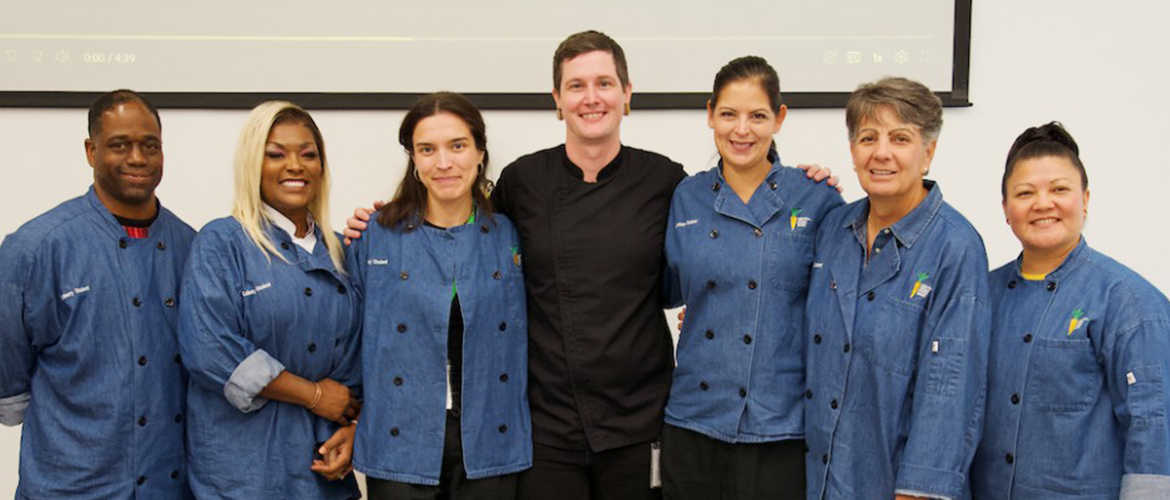
A group of culinary program graduates

Central Texas Food Bank’s culinary program combines instruction in cooking methods and food safety with case management and job opportunities.

Forging Paths to Food Security

Central Texas Food Bank in Austin is fighting food insecurity with programs that help people build the skills and confidence they need to land stable jobs. 

Dozens of people, including food bank volunteers and clients, have received instruction in cooking methods and food safety along with case management and job opportunities since the food bank’s culinary program launched in 2018. The organization added a warehouse training program last year and has hired the program’s first graduate.

“These job-training programs are a natural fit for our mission,” says Melinda Gonzales Boe, the food bank’s community investment director. “The root causes of hunger, including workforce development, have to be addressed.”

Central Texas Food Bank is one of nine food banks in seven states participating in the Good Jobs Challenge, launched by the national hunger-relief organization Feeding America® in 2023 with support from Health Care Service Corporation.  

Helping communities provide basic needs

More than 47 million people in the United States live in food-insecure households, according to the most recent federal estimates. 

HCSC has collaborated with national hunger-relief organization Feeding America since 2018 to help families get the food they need to thrive. 

The company also advances the work of many community-based partners through grants, volunteer events and other avenues to reduce hunger and improve access to nutritious food, investing more than $2.8 million in 2025.

“When communities lack access to nutritious food, it creates barriers to stability and long-term economic opportunity," says Maggie Sugrue, manager of HCSC’s corporate and civic partnerships. “HCSC is committed to supporting local partnerships that help to expand food access and support community members live healthier lives.”

Some of the initiatives supported by HCSC grants are expanding the capacity and reach of community gardens and farms that grow and distribute fresh produce. Other initiatives are strengthening the connections between food banks and partners such as schools and health care providers. 

U.S. veterans living in the Chicago area regularly receive free farm-fresh eggs, produce and meat from Manhattan, Illinois-based Farm2Veteran, which is using a grant from HCSC to grow its livestock herd and expand greenhouses on its 60-acre farm. 
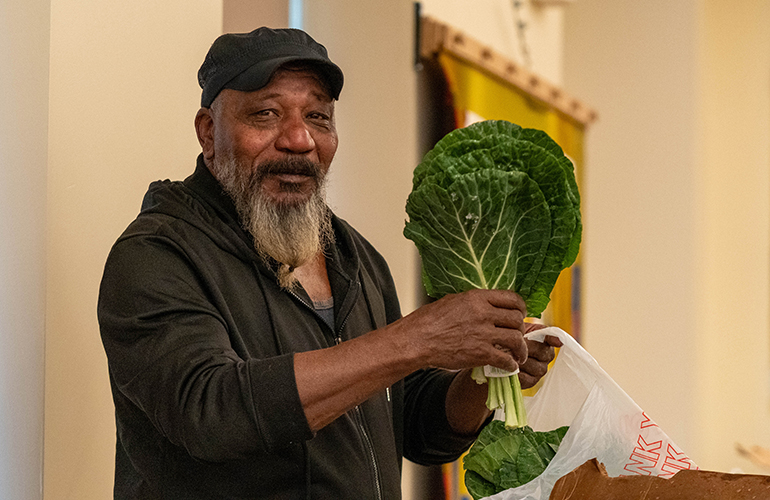
An older man holds up collard greens from a box of produce

Veteran Maurice Mosley selects fresh produce from Manhattan, Illinois-based Farm2Veteran.

“We want to make sure we are giving the best to our veterans,” says Michelle Keller, Farm2Veteran’s senior director. “These folks truly need it.”

In Albuquerque, New Mexico, a grant is helping YES Housing build community gardens, orchards, greenhouses and a food hub with processing capabilities for residents of a new housing community.  

“The two biggest costs are housing and food,” says Juan Lopez, YES’s healthy living agricultural development manager. “With us being able to have an onsite source of free food for our residents, they really don’t have to choose between, ‘Can I eat, or do I pay my rent?’”

A grant awarded to Montana Food Bank Network, one of HCSC’s longstanding community partners, is helping the organization expand access to its summer food program with meal boxes and new food service sites in tribal communities.  

In Oklahoma, where diabetes and heart disease are common in rural areas, Regional Food Bank of Oklahoma is distributing medically tailored meals through local health care providers to help patients manage their conditions. 

“Letting us insert ourselves into improving people’s health is truly life changing,” says Stephanie Harris, the food bank’s chief impact officer. “We’re helping get people out of a life of chronic illness.”

Another collaborative initiative funded by an HCSC grant is Brazos Valley Food Bank’s School Pantry Program in Texas. The organization embeds food pantries in more than a dozen schools to ensure students and families have the food they need in Brazos Valley, where 1 in 5 households with children report food insecurity.

“Our kids and staff can’t do their very best work if they aren’t being fed properly,” says Elizabeth Engelhardt, a special education teacher at A&M Consolidated High School in College Station, Texas.  “We’re always going to make sure that if we know basic needs aren’t being met that we’re helping the best we can.”

Health Care Service Corporation, a Mutual Legal Reserve Company.